Types of Koi Fish
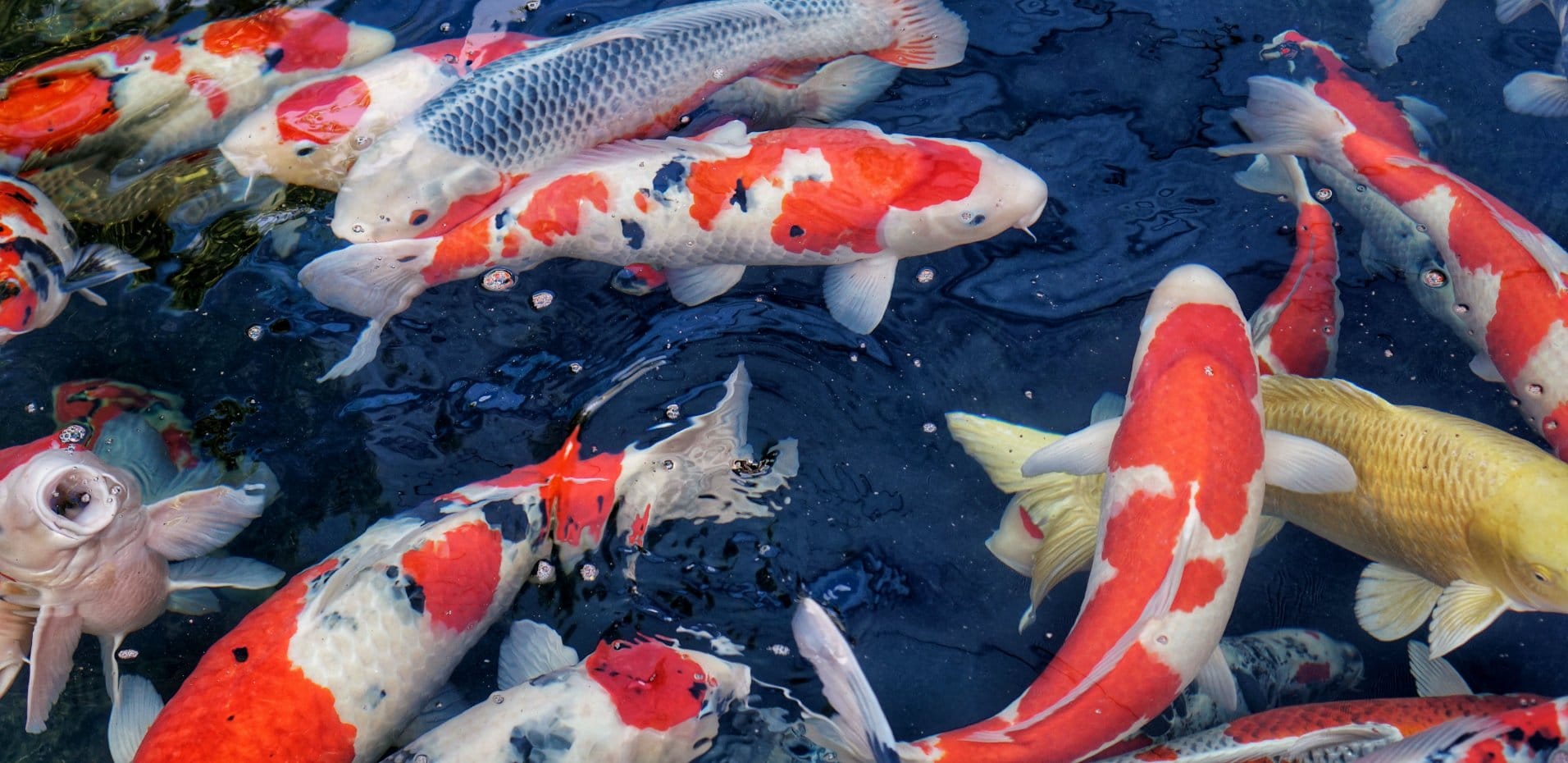
Quick answer: There are more than 100 named types of koi, grouped into about 13 main classes. The most popular are the Gosanke, or “Big Three”: Kohaku (red on white), Taisho Sanke (red and black on white) and Showa (red and white on black). Other well-known varieties include Shiro Utsuri, Tancho, Asagi, Ogon, Goshiki, Ochiba and Butterfly koi.
Gosanke: The Big Three
Kohaku, Taisho Sanke and Showa are known together as the Gosanke. They are the foundation of koi keeping, the most sought-after varieties in Japan, and the koi most often seen winning at shows.
Kohaku
Typical price at Toyoma Koi: $1,800 – $4,800, typically about $2,500
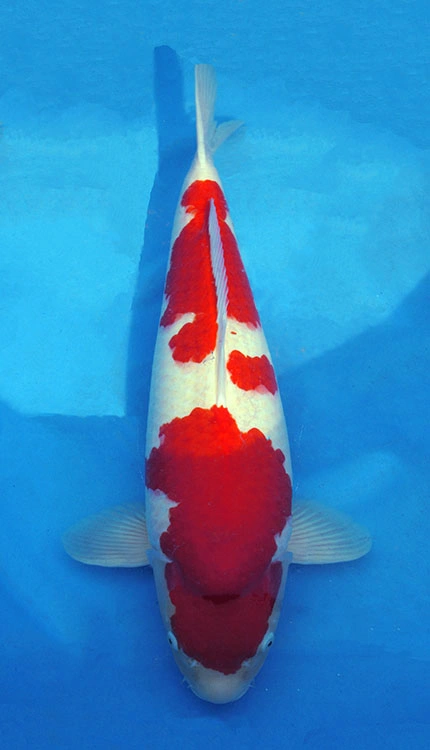
The Kohaku is the most classic koi of all: a snow-white body with a bold red (hi) pattern. Its simplicity is the challenge. With only two colors, every flaw shows, which is why a great Kohaku is so highly prized.
What to look for: Deep, even red with crisp pattern edges, a pure white base with no stains or yellowing, and a balanced pattern from head to tail.
See Kohaku available now →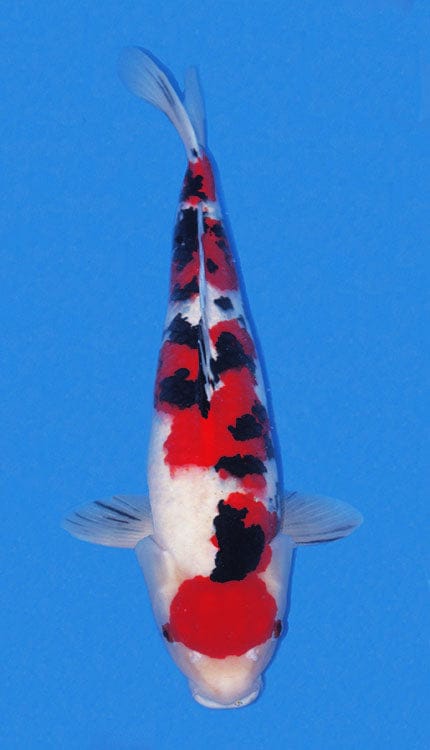
Taisho Sanke
Typical price at Toyoma Koi: $1,500 – $2,500, typically about $1,800
A Sanke is a white koi with a red pattern plus small, crisp black (sumi) accents. The black sits on the body rather than the head, adding depth and contrast to a Kohaku-style pattern.
What to look for: Clean white skin, a strong red pattern, and small, glossy black markings placed in balance along the back.
See Sanke available now →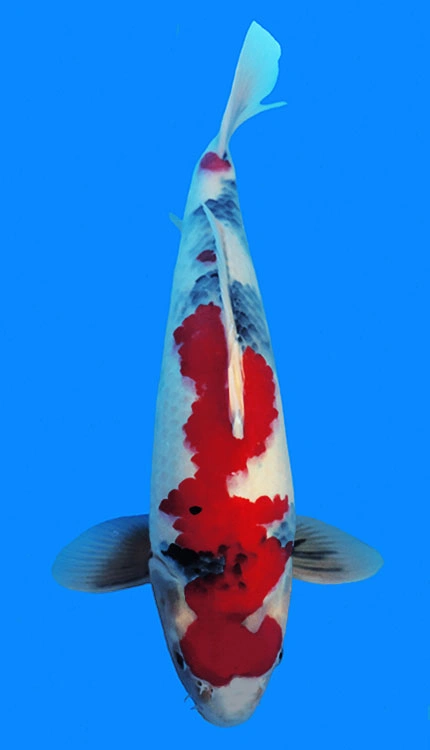
Showa
Typical price at Toyoma Koi: $1,500 – $2,800, typically about $2,500
A Showa is a black koi with red and white patterning. Unlike the Sanke, its black wraps around the body and usually reaches onto the head, giving it a bolder, more powerful look.
What to look for: Rich black that wraps around the body, black at the base of the pectoral fins (motoguro), and a balanced mix of red, white and black.
See Showa available now →Utsurimono: Black-Based Koi
Utsuri koi have a black base with a single second color. Their dramatic contrast makes them stand out in any pond.
Shiro Utsuri
Typical price at Toyoma Koi: $1,200 – $3,500, typically about $1,800
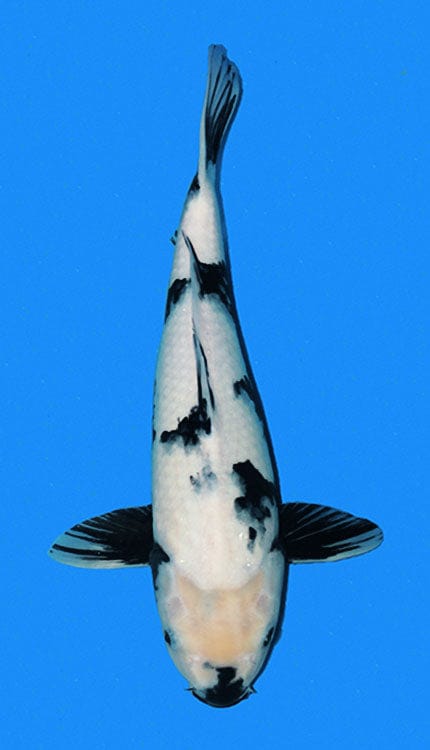
Black and white only. The deep black wraps through the body and head over a clean white base, creating one of the most striking looks in koi.
What to look for: Lacquer-like, even black, bright clean white, and a pattern that feels bold without becoming heavy.
See Shiro Utsuri available now →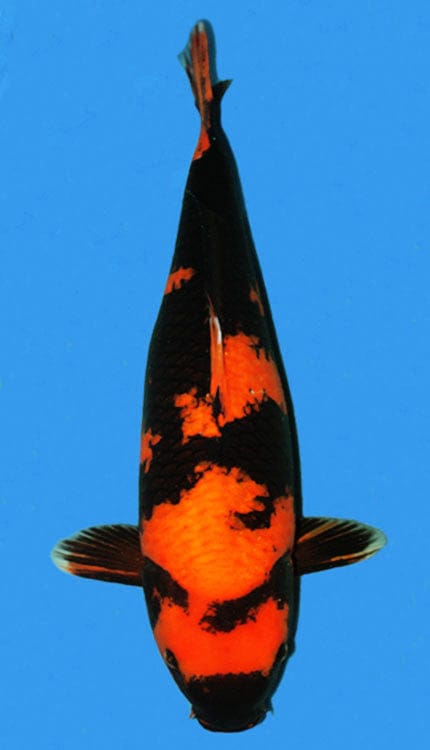
Hi Utsuri
A black koi with red to orange markings. A good Hi Utsuri shows strong, even red that contrasts sharply with the black.
What to look for: Deep, consistent red with no faded patches and solid black that wraps cleanly around the body.
Browse available koi →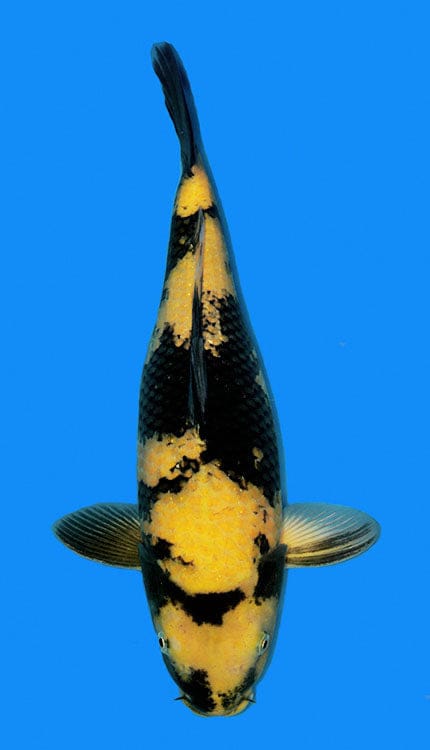
Ki Utsuri
A black koi with yellow markings. One of the rarer Utsuri varieties, admired for its bright, warm contrast.
What to look for: Clear, vivid yellow and strong black, with a balanced pattern from head to tail.
Browse available koi →Tancho: The Red Crown
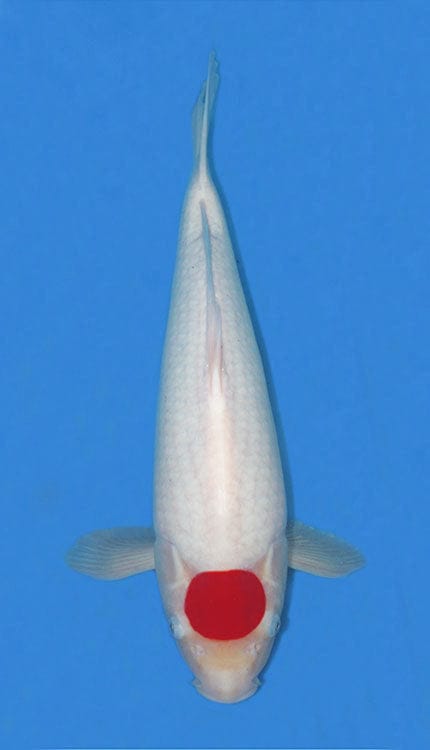
A Tancho has a single red spot on its head and no other red on its body. The name comes from Japan’s red-crowned crane, and the look echoes the Japanese flag. A round, centered spot is the prize.
Tancho Kohaku
A pure white koi with one red spot on the head. Also called Tancho or Tancho Kohaku, it’s one of the most recognizable koi in the world.
What to look for: A round, well-centered spot that doesn’t touch the eyes, and spotless white skin everywhere else.
Browse available koi →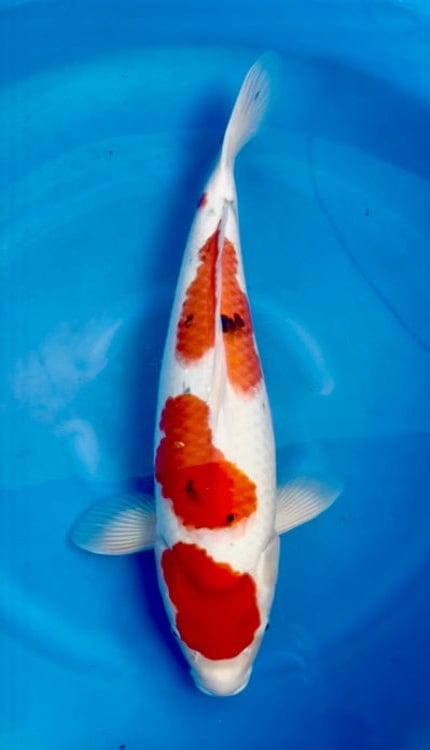
Tancho Sanke
A white koi with small black accents on the body and a single red spot on the head, combining the Tancho crown with Sanke-style sumi.
What to look for: A clean, centered red spot, crisp black markings and bright white skin.
Browse available koi →Metallic (Hikari) Koi
Hikari varieties have metallic skin that catches the light, making them easy to spot from anywhere around the pond.
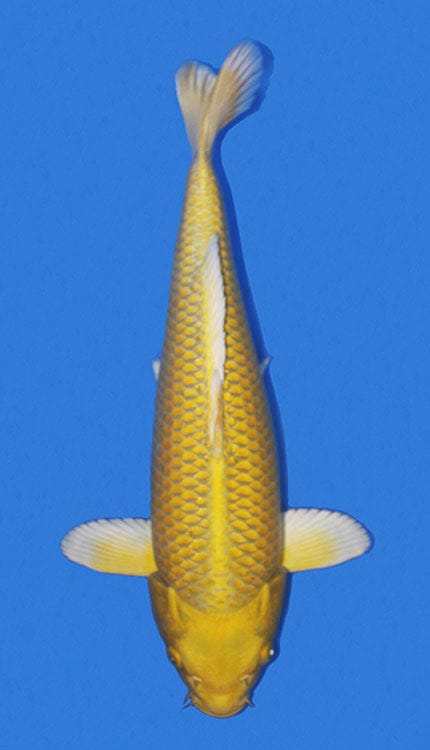
Yamabuki Ogon
A solid, metallic golden-yellow koi. Its beauty comes from the richness and evenness of the color rather than a pattern.
What to look for: Consistent gold from head to tail, a bright, clean head, and smooth metallic luster.
Browse available koi →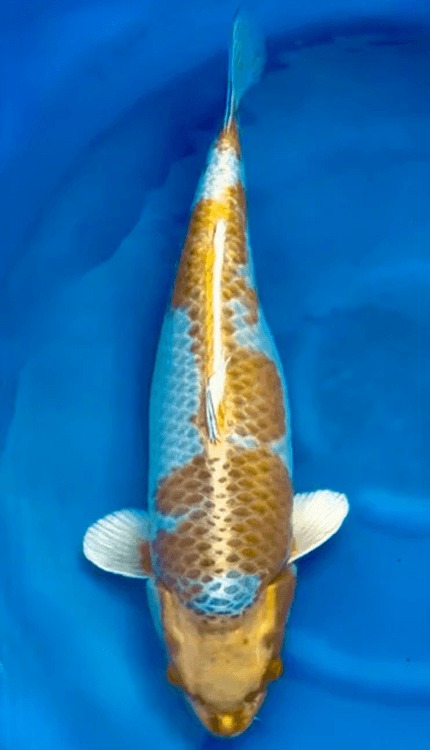
Kin Kujaku
A metallic koi with a bright platinum-white base, orange to red patterning and dark netting across the scales, giving it an ornate, pinecone-like finish.
What to look for: Strong luster, a clear pattern and even, well-defined netting.
Browse available koi →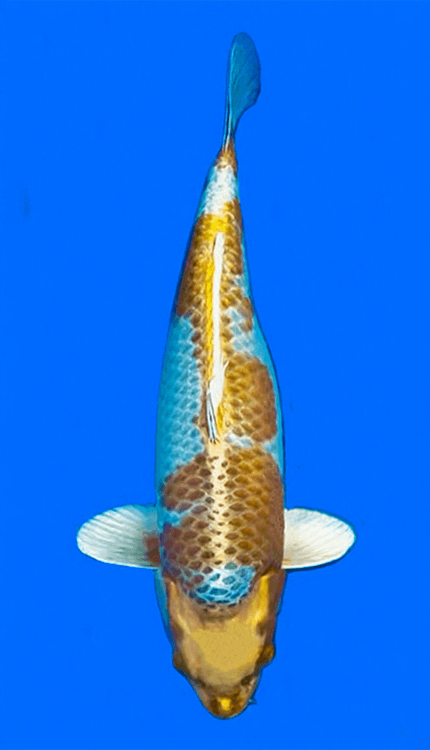
Kin Matsuba
A metallic gold koi with a dark center on each scale, creating the “pinecone” (matsuba) pattern.
What to look for: Even gold color and a neat, consistent pinecone pattern along the back.
Browse available koi →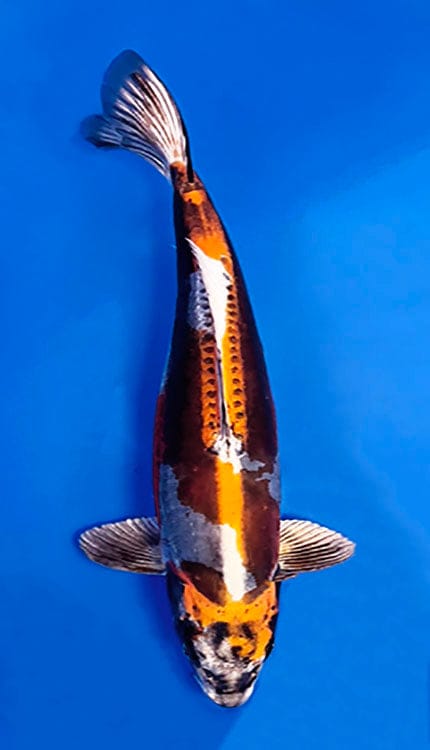
Beni Kikokuryu
A metallic doitsu (mostly scaleless) koi with black, white and red. Its pattern can shift as it matures, so no two ever look quite the same.
What to look for: Bright metallic skin, clean white areas and well-placed red.
Browse available koi →Other Popular Varieties
These varieties round out a collection with softer colors, intricate scale patterns and plenty of personality.
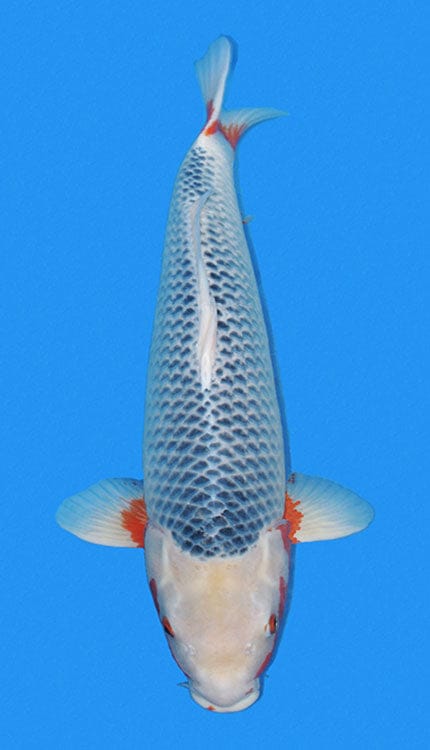
Asagi
One of the oldest koi varieties. An Asagi has a blue-gray, net-like scale pattern on its back and red to orange on its sides, fins and cheeks.
What to look for: Even, well-defined netting, a clear pale head and warm red that rises cleanly along the sides.
Browse available koi →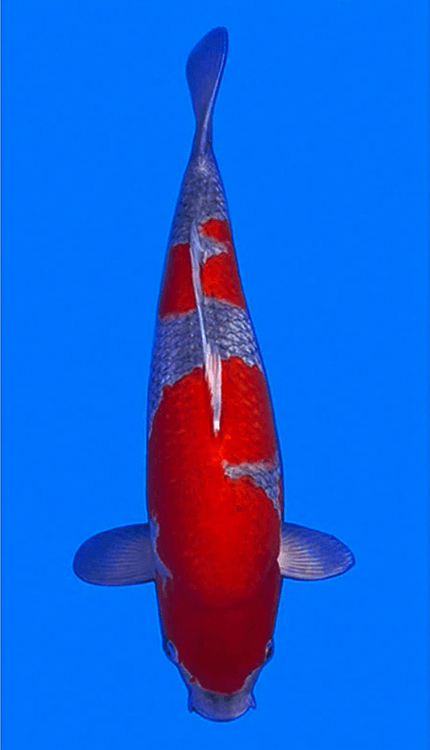
Goshiki
Goshiki means “five colors”: white, red, black, and light and dark blue. It looks like a Kohaku pattern over dark, netted scales, and it tends to darken in cooler water. Black Goshiki and Maruten Goshiki (with an extra red spot on the head) are popular variations.
What to look for: A clear red pattern, even netting and a clean head.
Browse available koi →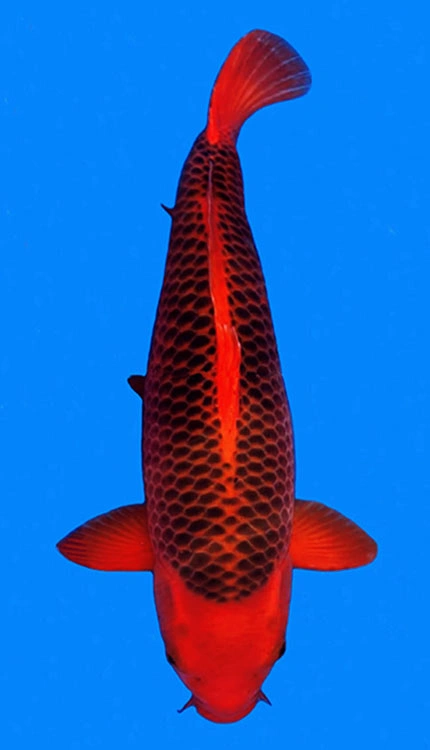
Aka Matsuba
A red koi with a dark center on each scale, creating a bold red “pinecone” pattern.
What to look for: Deep, even red and a neat, consistent pinecone pattern.
Browse available koi →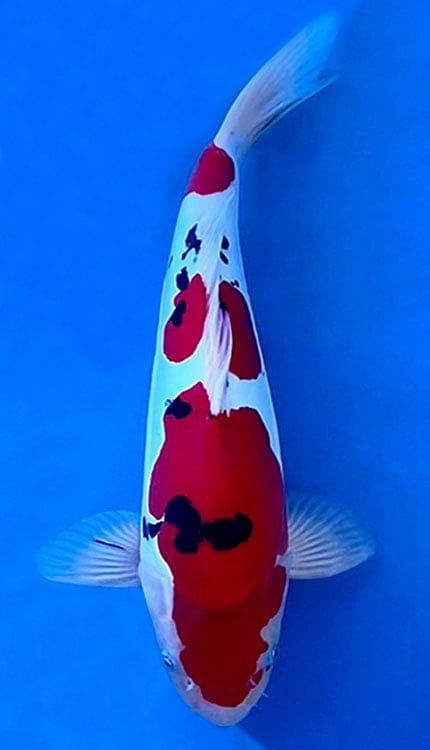
Doitsu and Ginrin Koi
Doitsu and Ginrin are scale types rather than varieties, and they can appear on many varieties. Doitsu koi have few or no scales, often with a neat line of scales along the back. Ginrin koi have sparkling, reflective scales that shimmer in the sun.
What to look for: On Doitsu, clean skin and an even scale line. On Ginrin, bright sparkle spread evenly across the body.
Browse available koi →Found a Variety You Love?
Let us know which koi caught your eye, or check our live auctions for current availability. Wondering what each variety costs? See our koi price guide.